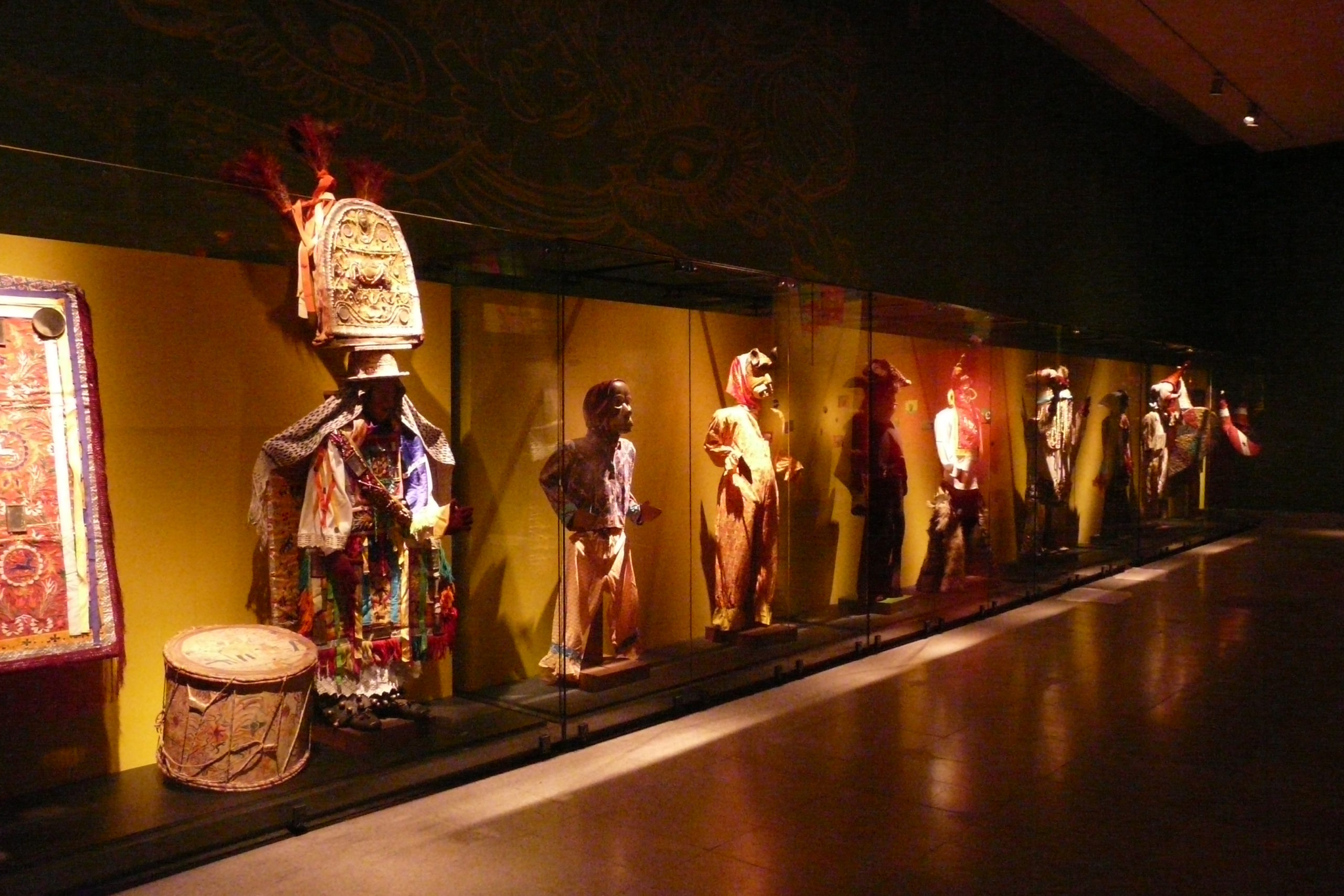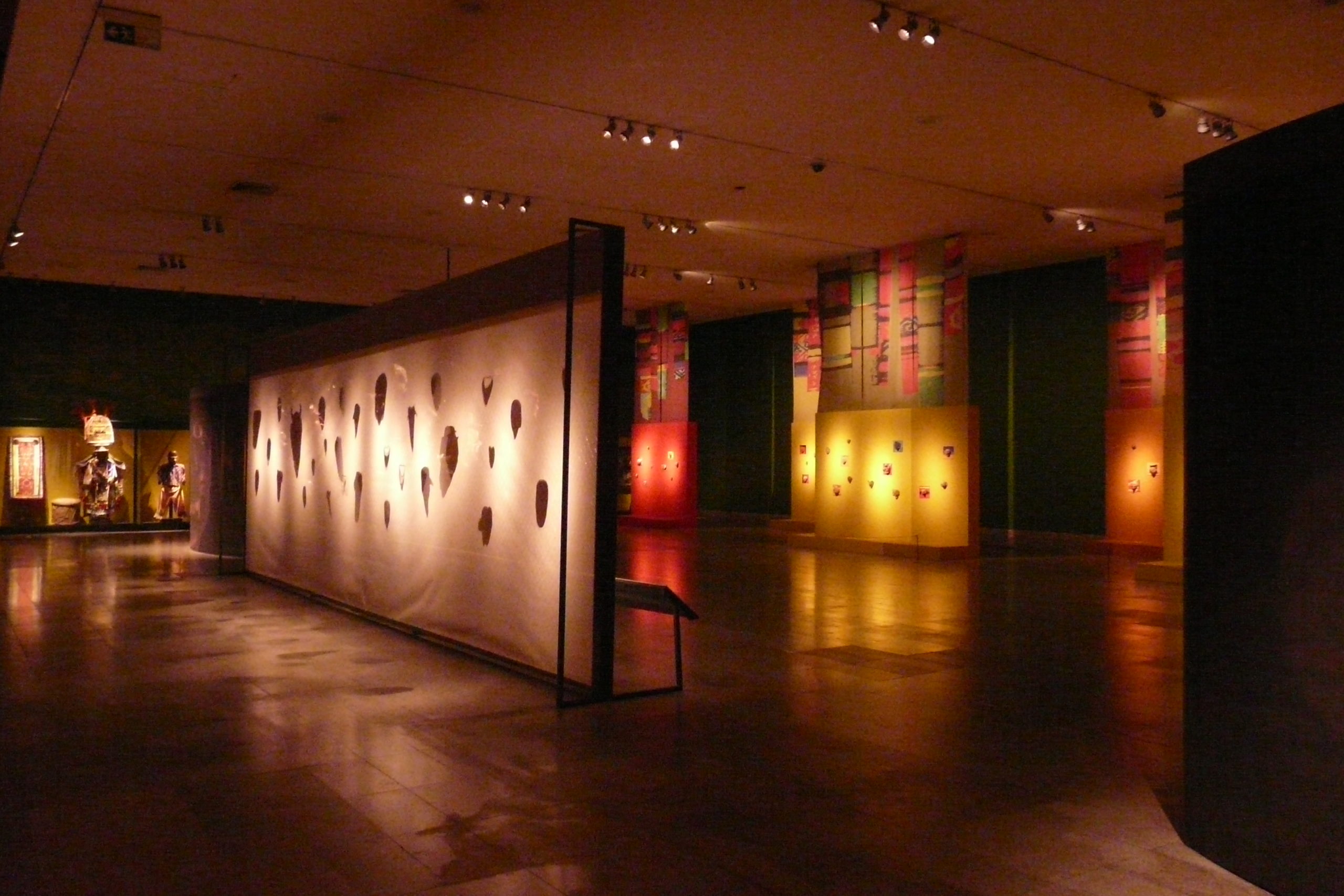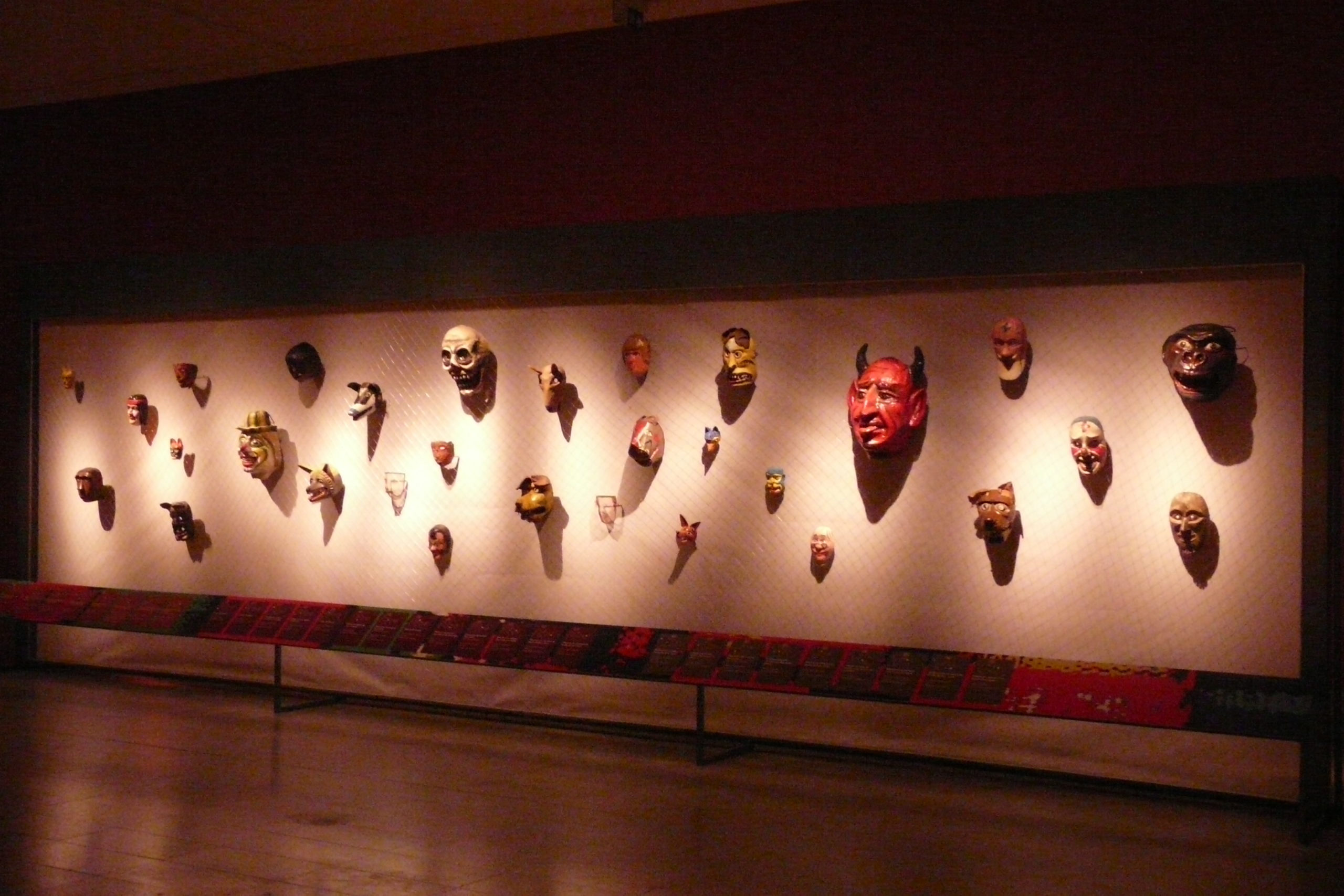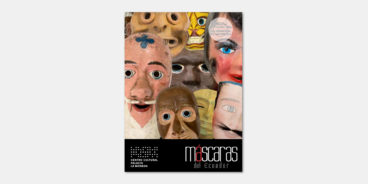


In Inca times, during ritual and religious representations the priest wore a different mask for each ceremony. In cultures of the coast of Ecuador, there is a continuity in the production and use of funerary and ritualistic masks until the arrival of the Spaniards in 1534. in the Amazon, masks and funerary urns with masks are still present.
As part of a costume, masks represent Andean sacred animals (jaguar, monkey, deer, bear, fox, different birds, etc.) linked to propitiatory rituals and were made of furs and feathers which today have been replaced by other materials. The use of masks is part of the Andean culture and reached as far as the northern and central region of Chile. The costumes worn during Catholic religious festivities are a hallmark of the merging of the indigenous and Hispanic cultures.
Masks give a supernatural identity to its wearer, whether for funeral purposes-covering the face of the dead to prepare them for their journey to the afterlife- or to protect the living from evil spirits, to adopt the spirit of gods or ancestors, or borrow the attributes of certain animals.
Masks also allow people to conceal their own identity and take on another. In Ecuador, masks are still worn during different holiday contexts: New Year, April Fool’s Day, Carnival, etc.